
Categories
Homeownership Tips, LifestylePublished November 5, 2026
Daylight Saving Time Checklist: 7 Home Maintenance and Safety Tasks to Do When the Clocks Change

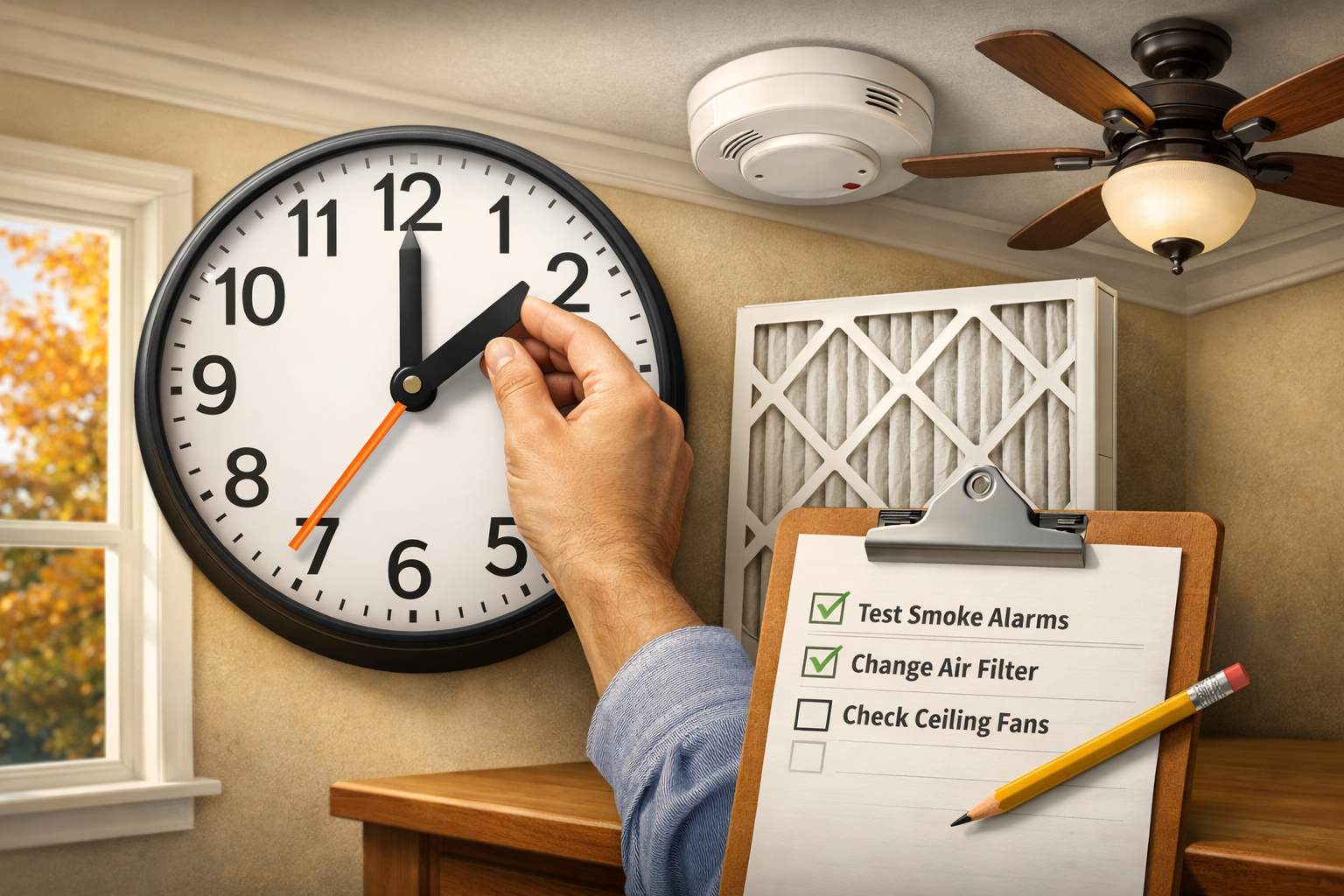
When daylight saving time rolls around, most people remember to change the clocks and maybe grumble about losing or gaining an hour of sleep. What often gets missed is that the clock change is also a perfect reminder to knock out a few simple home maintenance and safety tasks.
If you tie these jobs to daylight saving time each year, they are much easier to remember, and they can help you avoid expensive repairs, improve comfort, and keep your home safer. Here is a practical daylight saving time checklist with the most important things to handle when the clocks change.
Why daylight saving time is a smart reminder for home maintenance
Daylight saving time happens twice a year, which makes it an easy built-in trigger for recurring household tasks. Instead of trying to remember random maintenance dates, use the spring and fall clock changes as your cue to check the systems and safety items that protect your home year-round.
Whether you are a homeowner, a first-time buyer, or just trying to stay ahead of home upkeep, this checklist can save you time and stress later.
1. Replace your furnace or HVAC air filter
This is one of the most important items on the list. A dirty air filter can restrict airflow and make your heating and cooling system work harder than it should. Replacing the filter regularly (once a month or every 3 months) depending on the size and type of filter, helps keep the system running more efficiently and can reduce unnecessary wear on components like the blower motor.
It is a small maintenance step that can help you avoid bigger repair issues later. If you have not checked your filter in a while, daylight saving time is a great reminder to do it now.
- Check the filter size before buying a replacement
- Follow the airflow arrows when installing the new filter
- Replace it more often if you have pets, allergies, or heavy system use
2. Test your smoke detectors and replace batteries if needed
This is the other must-do item. Smoke detectors are one of the simplest and most important safety devices in any home. Use the clock change as your reminder to test every detector in the house.
If your smoke detectors use replaceable batteries and you are not sure when they were last changed, replace them. That can help you avoid the middle-of-the-night chirping that always seems to happen at the worst time, and more importantly, it helps make sure the detectors are ready when you need them.
- Press the test button on each detector
- Replace batteries if the unit uses them
- Check the manufacture date and replace older units if they are past their recommended lifespan
3. Recharge backup batteries and emergency devices
Daylight saving time is also a good moment to check the devices you may not think about until there is an emergency. Recharge battery-powered flashlights, portable power stations, tire inflators, and other backup tools you keep in your home or car.
If you keep a portable tire inflator in your vehicle, charge it now and place it somewhere visible so it makes it back into the car. Many people do not think about these tools until they are stranded with a low tire or dead battery.
- Recharge flashlights and lanterns
- Charge portable tire inflators and jump packs
- Check backup phone chargers and power banks
4. Check your generator and fuel supply
If you own a generator, daylight saving time is a smart reminder to inspect it before you actually need it. Make sure it starts properly, review the fuel level, and confirm you have the supplies recommended by the manufacturer for storage and operation.
If you store fuel, follow all safety guidelines and local regulations. If you use a fuel stabilizer, follow the product instructions and your generator manufacturer's recommendations.
- Test-start the generator if it is safe to do so
- Review fuel condition and storage practices
- Confirm extension cords and accessories are in good shape
5. Reverse your ceiling fans for the season
This is one of the easiest tasks on the list, and one of the most commonly forgotten. Many ceiling fans have a small switch that changes the blade direction.
In colder months, reversing the fan can help circulate warm air more evenly through the room. In warmer months, switching it back can help create a cooling breeze. If you are not sure which direction is right for the season, check the fan manual or manufacturer guidance.
6. Check weather stripping and draft points around doors and windows
Since daylight saving time often lines up with seasonal weather changes, it is a good time to walk through the house and look for drafts. Worn weather stripping and small air leaks around doors and windows can make your home less comfortable and force your HVAC system to work harder.
- Check exterior doors for gaps
- Inspect window seals for wear
- Replace damaged weather stripping where needed
7. Review your home emergency basics
Use the clock change as a quick checkpoint for your broader emergency readiness. You do not need a huge project, just a simple review of the basics.
- Make sure flashlights are easy to find
- Check that first-aid supplies are stocked
- Review where fire extinguishers are located
- Confirm family members know basic emergency plans
A simple daylight saving time routine can protect your home
Changing the clocks takes a minute. Using that same moment to handle a few key maintenance and safety tasks can pay off all year long. If you build this into your routine every spring and fall, you are much less likely to forget the small things that can turn into expensive or stressful problems later.
If you want a simple rule to remember, start with the two most important items first: replace your HVAC filter and test your smoke detectors. Then work through the rest of the checklist as time allows.
Quick daylight saving time checklist
- Change the clocks
- Replace the furnace or HVAC air filter
- Test smoke detectors and replace batteries if needed
- Recharge emergency devices and backup batteries
- Inspect your generator and fuel plan
- Reverse ceiling fans for the season
- Check doors and windows for drafts
- Review basic emergency supplies
Small habits like these can make homeownership easier, safer, and more predictable over time.

Troy Dykmann
| Keller Williams Realty Integrity NW - HomeSearchLIVE - Troy Dykmann
or another way