

Categories
Lifestyle, Neighborhoods & Community, Selling Your Home, Homeownership TipsPublished October 25, 2026
Healthy Lighting at Home: How Better Light Supports Sleep, Focus, and Everyday Comfort

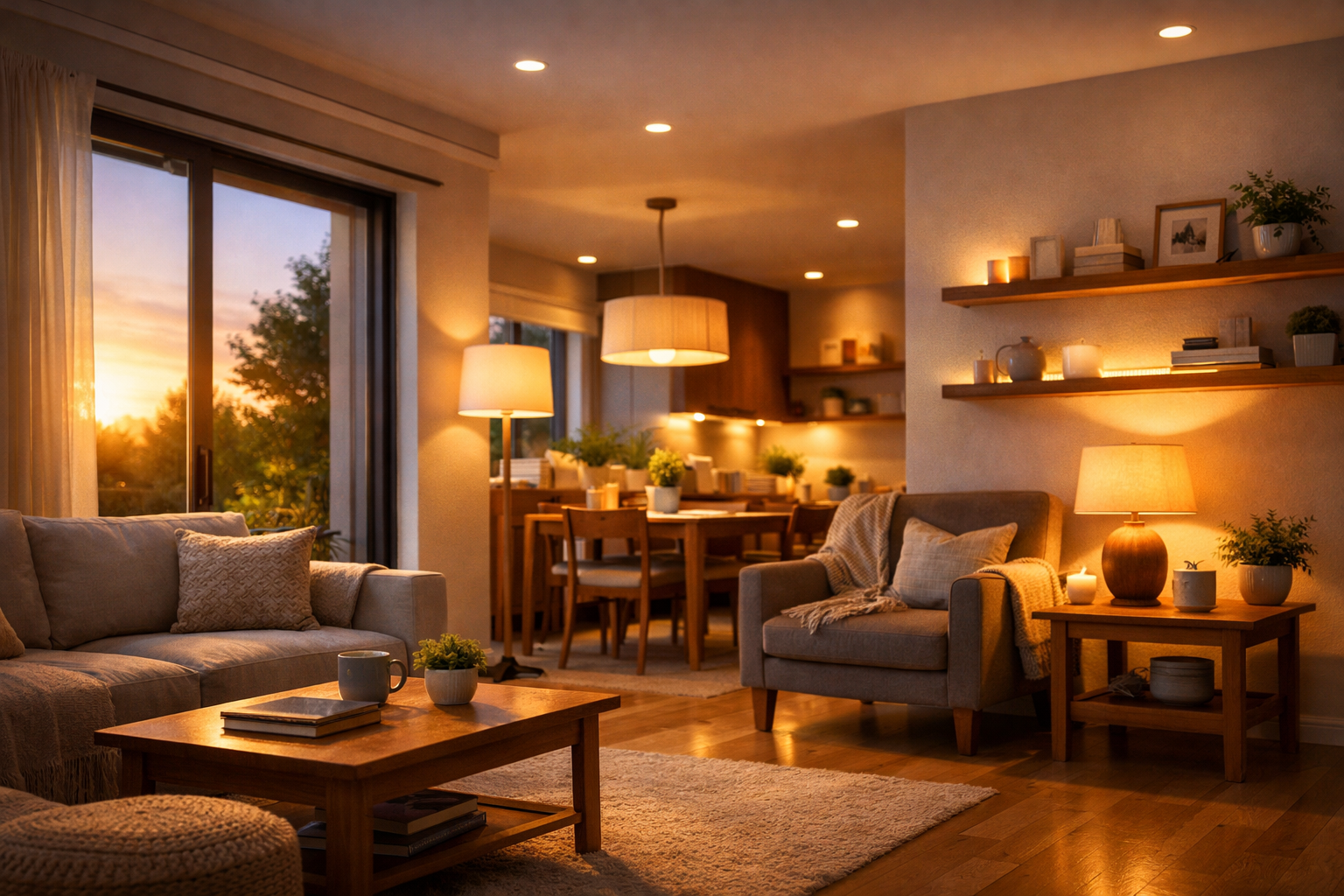
Lighting affects more than how a room looks. It also influences how alert you feel during the day, how easily you wind down at night, and how comfortable your home feels overall. Healthy lighting is the practice of using light in ways that support your body’s natural rhythms while still meeting the practical needs of daily life.
For homeowners, that usually means getting brighter, cooler light earlier in the day, reducing harsh and blue-rich light in the evening, and choosing fixtures and bulbs that improve comfort instead of creating glare or eye strain. The goal is not perfection. It is creating a home environment that works better for how people actually live.
What healthy lighting means
Healthy lighting is built around the idea that light affects the circadian system, the internal clock that helps regulate sleep and wake cycles. Daylight is the strongest cue for that system. Bright light in the morning and daytime helps reinforce alertness and timing. Lower, warmer light in the evening helps signal that it is time to slow down.
This approach is consistent with guidance from organizations such as the Center for Health Design's Health Lighting resources, the Sleep Foundation, and the National Institute of General Medical Sciences, which explain how light exposure influences circadian rhythms, sleep timing, and alertness.
Why it matters in everyday life
Most people spend a large share of their time indoors, where lighting often does not match the natural pattern of the day. Homes can be too dim in the morning, which may leave people feeling sluggish, and too bright at night, which can make it harder to fall asleep. Screens add to the issue, but room lighting matters too.
When lighting is planned more intentionally, homeowners may notice practical benefits such as:
- Better support for a consistent sleep routine
- Improved daytime alertness and focus
- Less glare and visual discomfort
- A calmer evening environment
- More functional spaces for reading, cooking, working, and relaxing
Healthy lighting is not a medical treatment, and results vary by person. Still, aligning home lighting more closely with natural daily patterns is a sensible design choice that can improve comfort and usability.
Start with daylight
The best place to begin is with natural light. Daylight helps anchor the body clock and usually provides better brightness and color quality than artificial light alone. If you are evaluating a home or improving your current one, pay attention to how daylight moves through the space.
Simple ways to make better use of daylight include:
- Open blinds and curtains early in the day
- Arrange breakfast nooks, desks, or reading chairs near windows when possible
- Use lighter wall colors and reflective finishes to help daylight spread
- Trim exterior landscaping that blocks useful daylight
- Choose window coverings that preserve privacy without eliminating all natural light
For buyers, daylight is worth noticing during showings. A home that receives balanced natural light can feel more inviting and may reduce the need for artificial lighting during the day.
Use brighter, cooler light during the day
Artificial lighting should support what daylight is already doing. In the morning and daytime, brighter light and cooler color temperatures can help with visibility and alertness, especially in kitchens, bathrooms, home offices, and utility spaces.
In practical terms, many homeowners prefer bulbs in the neutral to cool range for task-heavy daytime areas. The exact choice depends on the room and personal preference, but the broader principle is straightforward: daytime lighting should help you see clearly and stay engaged.
Layering also matters. Instead of relying on one overhead fixture, combine ambient lighting with task lighting. Under-cabinet lights in a kitchen, a desk lamp in an office, or vanity lighting in a bathroom can improve function without forcing the whole room to be overly bright.
Shift to warmer, dimmer light in the evening
At night, the strategy changes. Brighter and bluer light can interfere with the body’s preparation for sleep, so evening lighting should generally become warmer and dimmer. This does not mean living in the dark. It means reducing stimulation as bedtime approaches.
Helpful evening adjustments include:
- Use warm-toned bulbs in bedrooms, living rooms, and hallways
- Add dimmers where possible
- Choose shaded lamps and indirect lighting to reduce glare
- Limit very bright ceiling fixtures late at night
- Use low-level night lighting for safety instead of flooding the room with light
This is especially useful in bedrooms and bathrooms, where harsh late-night lighting can feel jarring and make it harder to settle back down.
Reduce glare and improve visual comfort
Healthy lighting is not only about circadian timing. Comfort matters too. Poorly placed fixtures, exposed bulbs, and shiny surfaces can create glare that causes eye strain and makes a room feel less pleasant.
To improve visual comfort:
- Avoid bulbs that are directly visible at eye level when seated
- Use diffusers, shades, or frosted bulbs where appropriate
- Balance light across the room instead of creating one overly bright hotspot
- Position screens to reduce reflections from windows and fixtures
- Choose task lighting that illuminates the work surface without shining into your eyes
These changes can make a home office more usable, a kitchen easier to work in, and a living room more relaxing.
Room-by-room healthy lighting ideas
Kitchen
Kitchens benefit from bright, even lighting during the day and early evening. Combine ceiling lighting with under-cabinet task lights so counters are well lit without excessive shadows.
Living room
Living rooms work best with layered lighting. Use a mix of lamps, sconces, and dimmable overhead fixtures so the room can shift from daytime activity to a calmer evening setting.
Bedroom
Bedrooms should support rest. Warm bedside lamps, dimmers, and blackout or light-filtering window treatments can help create a better sleep environment while still allowing useful daylight in the morning.
Bathroom
Bathrooms need clear task lighting at the mirror, but late-night overhead lighting can feel harsh. A layered setup with vanity lighting and a softer secondary option often works better.
Home office
Home offices need strong daytime visibility. Place the desk near daylight when possible, then add task lighting that supports reading and screen work without glare.
What buyers and sellers should notice
Healthy lighting is also a real estate conversation. Buyers often respond emotionally to homes that feel bright, comfortable, and easy to live in, even if they do not describe it in lighting terms. Sellers can improve that experience by opening window coverings, replacing mismatched bulbs, reducing glare, and making sure each room has lighting that fits its purpose.
For homeowners planning updates, lighting is one of the more approachable improvements because it can range from simple bulb changes to full fixture and control upgrades. Thoughtful lighting can make a home feel more polished, more functional, and more supportive of daily routines.
A practical way to get started
If you want to improve lighting without overcomplicating it, start with three steps:
- Increase useful daylight exposure in the morning. Open window coverings and spend time in the brightest parts of the home earlier in the day.
- Match lighting to the room’s job. Use brighter task lighting where work happens and softer layered lighting where people relax.
- Warm and dim the house at night. Shift bedrooms, living spaces, and hallways toward lower, warmer light in the evening.
Those changes alone can make a noticeable difference in comfort and routine.
Final thoughts
Healthy lighting is not about chasing a trend. It is about making homes work better for the people living in them. When lighting supports natural rhythms, reduces glare, and fits the way each room is used, the result is a home that feels more comfortable from morning through night.
Sources consulted for this article include HealthLighting.com resources on healthy lighting principles, circadian-lighting concepts summarized by the National Institute of General Medical Sciences, and consumer sleep guidance from the Sleep Foundation regarding light exposure and sleep quality.
Looking for a home with better light?
If natural light, window placement, and a home’s lighting potential matter to you, those details are worth paying attention to during your search. The right home can make it easier to enjoy brighter mornings, more comfortable workspaces, and calmer evenings.
If you are thinking about buying, selling, or preparing your home for the market, Troy Dykmann can help you evaluate the features that shape how a home lives day to day, including natural light, layout, and simple improvements that can make a space feel better.
Start your search at HomeSearchLIVE.com, or connect with Troy Dykmann for guidance on finding a home with the light, comfort, and potential that fit your lifestyle.

Troy Dykmann
| Keller Williams Realty Integrity NW - HomeSearchLIVE - Troy Dykmann
or another way